LPGA

Carolina Melgrati aveva un sogno a 10 anni. Adesso lo sta vivendo.

Carolina Melgrati aveva un sogno a 10 anni. Adesso lo sta vivendo.
Carolina Melgrati

Alberto Giolla, suo allenatore da bambina, ha un ricordo che gli torna in mente ancora adesso. Carolina aveva forse otto anni, stava partecipando a uno dei corsi del club per giovani, quando prese un ferro 8 e mandò la palla in buca da ottanta metri. Non festeggiò con un urlo, non alzò le braccia al cielo come fanno i professionisti. Saltellò fino alla buca per andare a recuperare la pallina. Come se quella fosse la cosa più naturale del mondo.

"Molto attenta e divertita da quello che stava facendo," ricorda Giolla. "Aveva già le idee chiare a 8-10 anni: mi disse che voleva fare la professionista di golf."

Oggi Carolina Melgrati gioca sull'LPGA Tour, il circuito femminile più importante del mondo. Non è un caso, e non è una sorpresa. È la realizzazione di un piano che aveva in testa da quando aveva otto anni.

È cresciuta a Monza, alle porte di Milano, e già qui c'è qualcosa da chiarire. "Non sono esattamente di Milano," tiene a precisare. Ha ragione: il suo club si chiama Golf Club Milano, ma sorge nel Parco di Monza. Il nome inganna tutti. "La scuola italiana non è molto comprensiva con gli atleti," dice. "La vita da atleta è talmente imprevedibile: è sempre bene avere una laurea sulle spalle." E quindi ha preso la laurea in Business Management all'Università dell'Arizona, in mezzo ai cactus e alla sabbia del deserto di Tucson. Quando la visitò per la prima volta nell'ottobre del 2019, capì che era il posto giusto. "La possibilità di praticare all'aperto tutto l'anno, con una squadra competitiva, su campi da golf spaziali: è tutto ciò che un atleta possa sognare."

Il primo anno a Tucson non fu facile. Viveva in un dormitorio con una ragazza della squadra di tennis, non riusciva ad aprirsi, chiamava i genitori in preda al panico dicendo di voler tornare a casa. "In fondo in fondo ero comunque convinta di dover portare a termine la missione college," racconta. E così rimase. Trovò, tra le altre, una grande amica: Ludovica, anche lei in Arizona, con cui ha condiviso paure, gioie e gli anni più formativi della sua vita.

University of Arizona

La decisione di diventare professionista la prese a dieci anni. Non è un'iperbole. "Ricordo di aver detto esplicitamente ai miei che da grande volevo diventare professionista e giocare in America." Da dilettante aveva già giocato tre volte l'Augusta National Women's Amateur, uno degli inviti più esclusivi del golf femminile. La scorsa estate fece il passo successivo, iscrivendosi alle qualifiche LPGA al Q-Series Final Stage di Mobile, Alabama: chiuse 17esima a -6, con tre birdie nelle ultime sei buche del giro finale che le permisero di rientrare nella fascia qualificata e mettere in tasca la carta per il 2026.

Adesso la vita sul tour è fatta di voli, hotel, green da imparare in fretta e avversarie che non fanno regali. Carolina dice che è più o meno come se l'aspettava, anche se una cosa l'ha sorpresa: "Un sacco di persone che vanno pazze per questo sport e non vedono l'ora di supportare noi giocatrici. Questa è l'America, alla fine. Non esiste nulla del genere in Italia, purtroppo."

"Dobbiamo raggiungere il livello del tennis. Al momento non abbiamo qualcuno che ricopra il ruolo di Sinner nel golf." Lo dice senza giri di parole. Il golf italiano ha ottimi giocatori, buone strutture in certi contesti, ma manca il fenomeno capace di trascinare un'intera generazione davanti alla televisione. E finché non arriva, il circolo vizioso continua: pochi tifosi, poca visibilità, pochi investimenti, pochi giovani che si avvicinano allo sport.

"Bisogna prima di tutto superare questa barriera ideologica. Noi golfisti siamo sempre considerati un'elite, ma non è così. Basti pensare allo sci, o al tennis: sport non economici, ma che quasi tutti praticano."

Sant Ambroeus Milano

Sul campo, il suo punto di forza è il gioco lungo. Quando il driver funziona, dice, non ci sono problemi. Si definisce aggressiva, sempre alla ricerca del birdie. I primi mesi sull'LPGA non sono stati facilissimi: quattro tornei, quattro tagli mancati. Blue Bay, Fortinet Founders Cup, Ford Championship, JM Eagle LA Championship, dove è arrivata vicinissima, a un colpo solo dalla linea del taglio. "Ultimamente non sono proprio in forma," ammette, "quindi cerco di mantenere un atteggiamento più conservativo al momento." Questo weekend a Mayakoba, al Riviera Maya Open, cerca il primo taglio superato in carriera sul tour.

Giolla la ricorda con un'immagine che dice tutto: "La serietà e la dedizione con cui si allena. Il continuare a ripetere finché non riusciva." L'ha seguita anche da lontano, nel tempo. "La seguo quando è in gara, vedo i risultati. Ci sentiamo ogni tanto." E aggiunge, quasi con sorpresa: "Neanche a farlo apposta, lo stesso giorno in cui mi ha mandato le domande ci siamo sentiti."

Per tutto quello che ha guadagnato, ci sono cose che ha lasciato indietro.

Le manca portare la nonna a bere il caffè la mattina. Le manca Sant Ambroeus, corso Matteotti, quel posto dove il tempo sembra essersi fermato agli anni Quaranta, dove il caffè costa il doppio ma nessuno si lamenta perché è giusto così. Le mancano le cene dove ci si può lamentare del piatto. Le manca svegliarsi con gli uccellini fuori dalla finestra, invece del rombo dei motori americani in strada.

Sul cappellino porta sempre il tricolore italiano. Lo perse una volta, durante un viaggio. "Ero disperata. Dovetti comprarne uno uguale appena possibile." Il filo che la ricollega a Monza, alla nonna, agli uccellini fuori dalla finestra deve essere visibile da qualche parte. Tanto vale che sia sul cappellino.

La bambina di otto anni che saltellò verso quella buca a Monza è ancora lì, da qualche parte. Sta solo aspettando il suo momento.

Alberto Giolla, her childhood coach, still thinks about this moment. Carolina was maybe eight years old, taking part in one of the club's junior courses, when she took an 8-iron and holed out from 80 meters. She didn't shout, didn't throw her arms in the air the way professionals do. She skipped over to the hole to go get the ball back. As if it were the most natural thing in the world.

"Very focused and having fun with what she was doing," Giolla remembers. "She already had a clear idea of what she wanted at 8 or 10 years old. She told me she wanted to become a professional golfer."

Today Carolina Melgrati plays on the LPGA Tour, the most important women's circuit in the world. It's not a coincidence, and it's not a surprise. It's the fulfillment of a plan she had in her head since she was eight years old.

She grew up in Monza, just outside Milan, and right away she wants to clarify something. "I'm not exactly from Milan," she's quick to say. She's right: her club is called Golf Club Milano, but it sits inside the Park of Monza. The name fools everyone. "Italian schools are not very accommodating with athletes," she says. "The life of an athlete is so unpredictable — it's always good to have a degree to fall back on." So she got her Business Management degree at the University of Arizona, surrounded by cactus and desert sand in Tucson. When she visited for the first time in October 2019, she knew it was the right place. "The ability to practice outdoors all year, with a competitive team, on incredible golf courses — it's everything an athlete could dream of."

The first year in Tucson wasn't easy. She lived in a dorm with a girl from the tennis team, couldn't open up, called her parents in a panic saying she wanted to come home. "Deep down I was still convinced I needed to see the college mission through," she says, with the clarity that defines her. So she stayed. She found, among others, a close friend: Ludovica, also in Arizona, with whom she shared fears, joys, and the most formative years of her life.

She decided to turn professional at age ten. That's not a figure of speech. "I remember telling my parents explicitly that when I grew up I wanted to become a professional and play in America." As an amateur she had already played the Augusta National Women's Amateur three times — one of the most exclusive invitations in women's golf. Last summer she took the next step, entering LPGA qualifying at the Q-Series Final Stage in Mobile, Alabama, finishing 17th at -6, three birdies in the last six holes of the final round enough to get inside the top 25 and secure her card for 2026.

Now life on tour is flights, hotels, greens to figure out quickly, and opponents who give nothing away. Carolina says it's more or less what she expected, though one thing surprised her: "So many people who are crazy about this sport and can't wait to support us players. That's America, in the end. Nothing like that exists in Italy, unfortunately."

"We need to reach the level of tennis. Right now we don't have anyone in golf who fills the role that Sinner fills." She says it plainly, no hedging. Italian golf has good players, decent infrastructure in certain pockets, but it lacks the phenomenon capable of pulling an entire generation in front of the television. And until that person arrives, the cycle continues: few fans, little visibility, little investment, few young people coming to the sport.

"First of all you have to break through this ideological barrier. Golfers are always seen as elite, but that's not true. Just look at skiing, or tennis — not exactly cheap sports, but ones that almost everyone plays."

On the course, her strength is her long game. When the driver is working, she says, there are no problems. She describes herself as aggressive, always hunting birdies. But the first months on the LPGA haven't been easy: four tournaments, four cuts missed. Blue Bay, Fortinet Founders Cup, Ford Championship, and JM Eagle LA Championship, where she came closest — finishing at even par, one shot outside the cut line. "Lately I'm not exactly in form," she admits, "so I'm trying to keep a more conservative approach for now." This weekend at Mayakoba, at the Riviera Maya Open, she's looking for her first made cut on tour.

Giolla sums her up with one image: "The seriousness and dedication with which she trains. She would keep repeating something until she got it right." He has followed her from a distance. "I follow her when she's competing, I check the results. We talk every now and then." Then adds, almost with a laugh: "Of all days, the same day she sent me your questions, we happened to talk."

For all the things she's gained, there are things she's left behind.

She misses taking her grandmother for coffee in the morning. She misses Sant Ambroeus, via Matteotti, that place where time seems to have stopped in the 1940s, where the coffee costs twice as much and nobody complains because that's how it should be. She misses dinners where you can complain that the flavors are off. She misses waking up to birds outside the window instead of the roar of American engines on the street.

On her cap, she always wears the Italian flag. She lost it once, on a trip. "I was devastated. I had to buy an identical one as soon as possible." The thread back to Monza, to the grandmother, to the birds outside the window — it has to be visible somewhere. Might as well be on the cap.

The eight-year-old who skipped to a hole in Monza is still in there somewhere. She's just waiting for her moment.

← Torna alla home
Diciotto
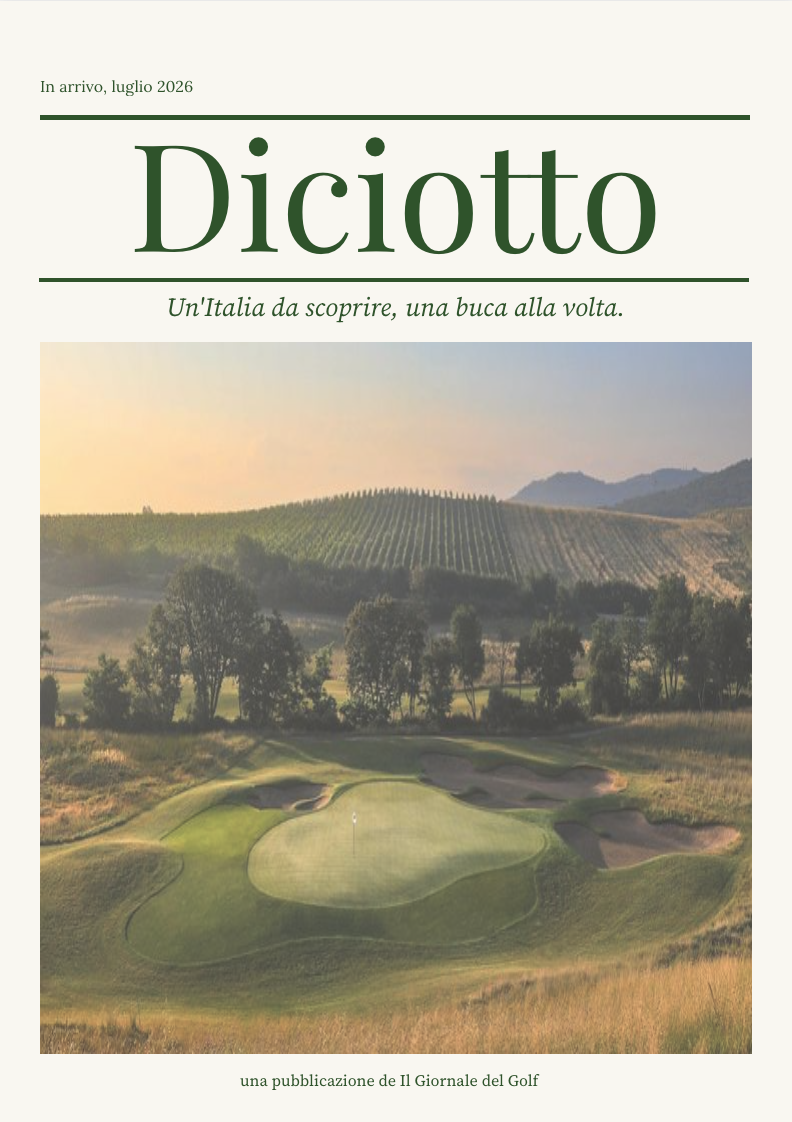
In arrivo, luglio 2026 Diciotto Un'Italia da scoprire, una buca alla volta.
Iscriviti →